World Cochlear Implant Day is commemorated every February 25th, and specialists recall the importance of early detection and timely treatment of hearing loss, a condition that affects millions of people worldwide and can have significant consequences for development, social life, and brain health.
Hearing loss is a frequent health problem, and according to the World Health Organization (WHO), more than 360 million people worldwide have some degree of hearing loss, representing approximately 5% of the world's population. In children, it affects 5 in every 1,000 newborns, with an even higher incidence in those who required neonatal intensive care.
In Latin America, it is estimated that nearly 30 million people live with hearing loss, of which 5 million have severe forms. In Argentina, between 700 and 1,200 children are born each year with hearing loss, while around 500,000 people have significant difficulties hearing, according to a report accessed by the Argentine News Agency (NA).
"Listening is much more than perceiving sounds. It is an essential tool for language development, learning, and social interaction. Detecting and treating hearing loss in time can change your life. When hearing loss is not diagnosed in time, especially in children, it can directly affect their development and their integration," explains Dr. Liliana Tiberti, a specialist in Otology and Otoneurosurgery at the British Hospital (M.N. 69.199).
In adults, hearing loss hinders conversations, especially in noisy environments. This generates frustration, isolation, and affects social and work life. For this reason, auditory rehabilitation is fundamental to preserve brain function and quality of life.
In Argentina, the first cochlear implant in Latin America was performed in 1980 at the British Hospital of Buenos Aires by Dr. Jorge Schwartzman, then head of the Otolaryngology Service.
Why is it commemorated on February 25?
World Cochlear Implant Day commemorates the first cochlear implant performed in 1957 by doctors André Djourno and Charles Eyriès in France. Unlike hearing aids, which amplify sound, the implant directly stimulates the auditory nerve through electrical impulses, allowing the brain to perceive sounds.
At that time, they inserted a single copper thread into the inner ear of a patient with total hearing loss, allowing them to perceive a minimal sound sensation for the first time. Although rudimentary, this procedure marked the beginning of a revolution that would transform the lives of millions of people.
In the 1960s, Dr. William House, considered one of the pioneers of this technique, along with John Doyle and engineer James Doyle, managed to implant multiple electrodes into the cochlea, a system where the cables came out through the skin and connected to desktop-sized computers. In 1973, the first modern cochlear implant was approved by the FDA, beginning its commercialization and starting a continuous technological evolution that today allows for extraordinary results.
What is a cochlear implant?
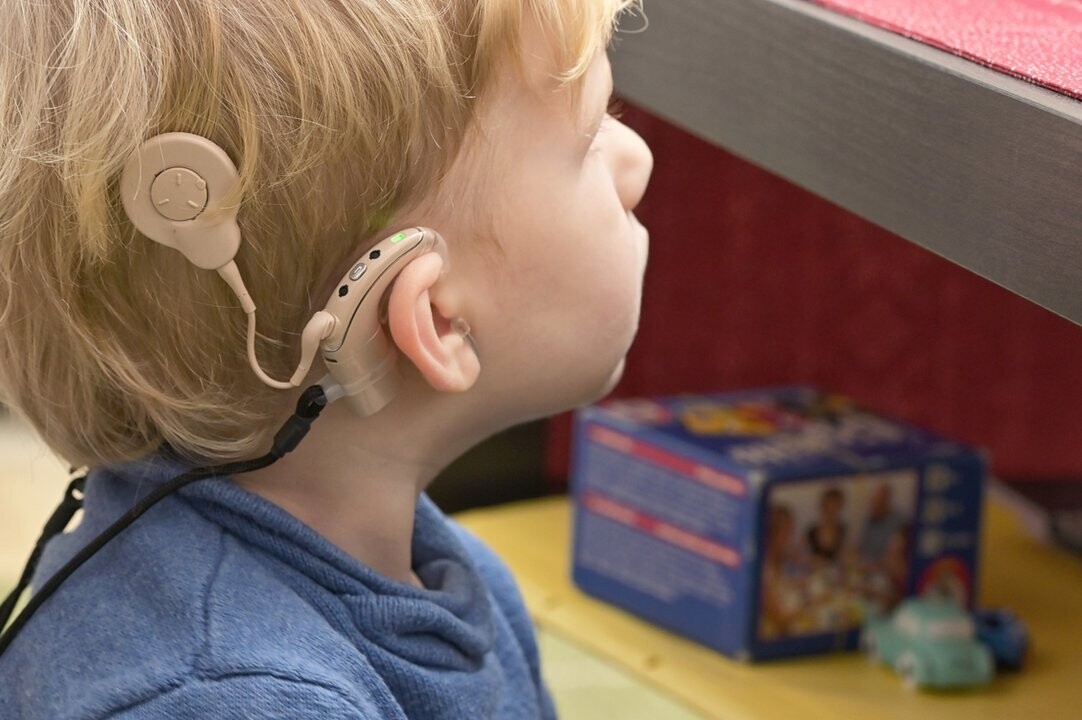
A cochlear implant is a device indicated for people with severe or profound hearing loss who do not obtain sufficient benefit from hearing aids. It consists of an external component, which captures sounds, and another internal component, which is implanted through surgery inside the ear and transmits the signals to the cochlea. It activates about a month after the intervention, starting the auditory rehabilitation process. It is used in babies, children, and adults with significant hearing loss.
"If a person has difficulty hearing, it is essential to consult. The indication arises from the evaluation of a multidisciplinary team, and subsequent rehabilitation is key to achieving successful results. Listening is not just hearing, it is communicating, it is participating. It helps to stay connected with others and improve the quality of life," the specialist noted.